
A burst pipe at 10 PM. A roof damaged by a storm. A homeowner discovering bed bugs. Someone looking for health insurance after losing their coverage.
Each situation can lead to a phone call. But the circumstances behind those calls, and what consumers expect when someone answers, are very different.
For advertisers running pay-per-call campaigns, those differences influence which searches are worth targeting, when demand appears, how calls should be qualified and which outcomes matter most.
A consumer who needs help immediately may be ready to act. Whether that urgency translates into a valuable lead depends on the service requested, the advertiser's requirements and what happens when the call connects.
Pay-per-call marketing is a performance-based advertising model in which advertisers pay for inbound phone calls that meet agreed qualification criteria. Depending on the campaign, these may include the caller's location, service requirements, call duration or other eligibility conditions.
Calls can originate from search advertising, affiliate partnerships and other traffic sources. Tracking, qualification and routing systems help connect callers with relevant advertisers and determine which calls meet the campaign's requirements.
The model is especially relevant to industries where speaking with a provider is an important step toward making a purchase or booking a service.
Within those industries, the reason behind the call can shape the entire campaign.

Someone planning a bathroom renovation may compare providers, request several quotes and schedule work weeks in advance. Someone dealing with a burst pipe is likely to prioritize immediate availability.
That difference is visible in search behavior. Terms such as "emergency plumber near me" or "24-hour plumber" indicate an immediate need, while searches related to installation costs or planned renovations suggest a longer decision process.
For pay-per-call advertisers, the distinction affects more than keyword selection. Emergency and planned-service campaigns can produce different call patterns, qualification rates and conversion timelines. Evaluating them together can make it harder to identify which types of demand are delivering value.
Service specificity adds another consideration. Emergency drain cleaning and water heater installation involve different requirements, timelines and potentially different providers. Broad plumbing targeting can obscure which services are driving results.
Operating hours can also change the economics of emergency traffic. If a campaign generates calls outside the advertiser's availability, strong search intent has little commercial value.
Before expanding emergency-related targeting, advertisers should review when qualified calls are coming in, how many are connecting successfully and whether the provider has the coverage to handle additional demand.
Roofing demand can change quickly when severe weather affects a particular area.
The National Weather Service identifies damaging winds and hail among the hazards associated with severe thunderstorms. These events can create concentrated local demand for roofing inspections and repairs across multiple properties in the same geographic area.
For advertisers, the challenge is responding to that demand without losing control of campaign economics.
Searches for emergency roof repairs, storm damage inspections and full roof replacements can rise around the same event. A homeowner dealing with an active leak may want immediate assistance, while someone researching a replacement may still be comparing contractors.
Following a major storm, rising search demand may create an opportunity to expand geographic targeting or increase spend in affected areas. Before doing so, advertisers should review contractor coverage, appointment capacity and the qualification rates of calls already coming from those locations.
If call volume rises while qualification rates decline, advertisers should review which locations and search terms are driving the change before increasing spend. The next step may be refining geographic targeting, adjusting the services being promoted or reviewing which types of searches are attracting unsuitable callers.
Where qualification rates remain strong and contractors have available capacity, additional investment may be justified.
A campaign performing well immediately after a storm may need different settings once the initial demand begins to settle.
Pest control presents a different challenge because the consumer's immediate problem can be more informative than the broader service category.
Someone researching how to prevent ants from entering their home may be looking for information. Someone searching for professional bed bug treatment may already be seeking a service provider.
Both searches fall under pest control, but they represent different stages of the decision process.
The type of treatment also influences whether a call is relevant. Some pest control companies handle rodents and common household insects, while others offer wildlife removal or more specialized treatments.
For advertisers, this makes pest-specific performance analysis useful. If a broad campaign attracts substantial traffic but few qualified calls, examining which pests and treatments callers are requesting can help identify where targeting needs to become more specific.
Seasonality introduces another layer. Demand varies by region and pest, so advertisers can use local search patterns and historical campaign performance to determine which treatments deserve more attention at different times of year.
For example, a seasonal increase in searches for a particular pest may justify shifting budget toward that treatment, provided the advertiser offers the service and the traffic produces qualified inquiries.
Health insurance demonstrates how urgency can influence lead generation differently from emergency home services.
A consumer who has lost employer-sponsored coverage may need to find new insurance quickly. Someone approaching an enrollment deadline may also be motivated to act, but both situations involve eligibility requirements and decisions about coverage.
According to HealthCare.gov, certain life events, including losing health coverage, getting married or having a baby, may qualify consumers for a Special Enrollment Period outside regular Marketplace Open Enrollment.
For advertisers, this creates a distinction between consumer motivation and lead qualification.
A person searching urgently for coverage may be ready to speak with someone, but the relevance of that call depends on factors such as the type of insurance being promoted, location and applicable eligibility requirements.
An increase in calls during an enrollment period may initially look like stronger performance. But if qualification rates decline, advertisers need to understand whether the additional traffic includes consumers seeking different coverage options or people who don't meet the campaign's requirements.
Reviewing search intent alongside qualification outcomes can help identify which audience segments deserve additional investment.
Campaign messaging should also reflect the applicable enrollment rules and coverage requirements, so consumers understand the offer before calling.
Different demand patterns require different campaign decisions. Three areas deserve particular attention: targeting, messaging and call handling.
Search intent provides clues about what someone needs.
"Plumber near me" can represent several services and levels of urgency. "Emergency burst pipe repair" identifies a more specific problem.
That specificity helps advertisers group traffic, tailor messaging and evaluate incoming calls.
However, keyword performance becomes more meaningful when connected to qualification and conversion data.
A highly specific search may generate fewer calls but a greater proportion of suitable inquiries. A broader keyword may produce more volume at a lower initial cost, yet require more filtering.
Comparing those outcomes by intent category helps advertisers determine which searches justify additional investment.
Ad messaging influences both call volume and relevance.
For emergency services, consumers may need to know whether the provider offers the required repair, covers their location and is available when needed.
For planned services, information about consultations, quotes and the scope of work may be more useful.
For insurance, clarity about coverage and applicable eligibility conditions is essential.
When campaigns attract callers requesting unsupported services, advertisers can review whether the ads are creating expectations that the business cannot meet.
That might mean making service descriptions more specific, clarifying geographic coverage or adjusting the landing page to better reflect the advertiser's offering.
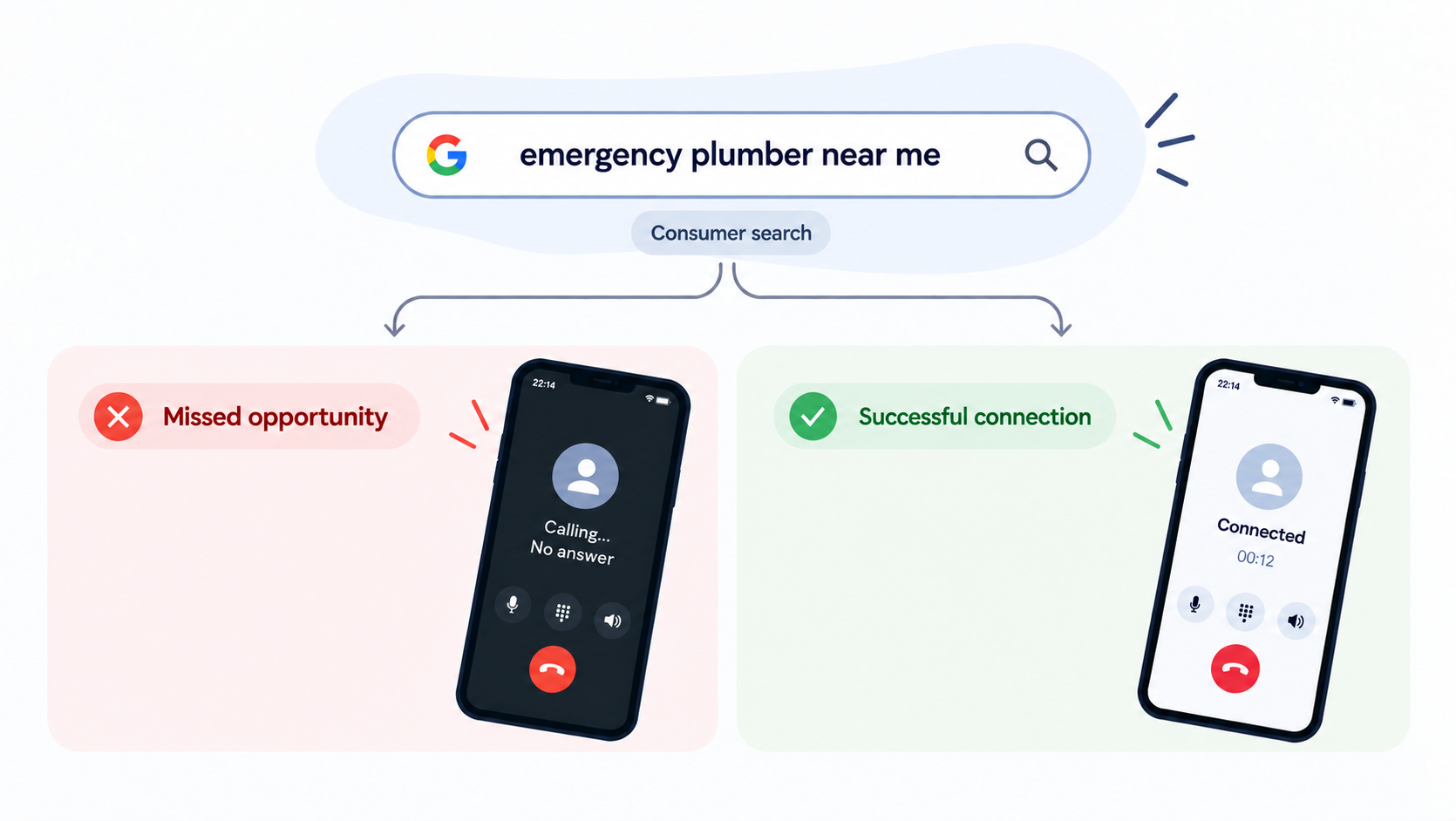
Call handling can determine whether relevant traffic produces a commercial opportunity.
An emergency caller may contact another provider if their first call goes unanswered. A contractor dealing with a surge in storm-related inquiries may struggle to handle additional volume. An insurance caller may need to reach someone who can discuss the relevant coverage.
Google's guidance for call-focused advertising recommends scheduling ads when someone is available to answer.
In pay-per-call campaigns, routing can account for location, service requirements, advertiser availability, and other agreed conditions. Where the campaign setup and buyer agreements allow it, overflow routing can direct unanswered calls to another eligible buyer.
Our earlier piece on making pay-per-call work explores how Creative Clicks approaches traffic sourcing, call qualification and routing.
When connection rates fall, advertisers should examine whether calls are arriving outside operating hours, reaching unavailable buyers, or encountering routing issues.
These findings can lead to adjustments in campaign schedules, buyer distribution, or call-routing rules before additional traffic is introduced.
Call volume indicates how much demand a campaign generates. Qualification and conversion data show how much of that demand creates value.
Call duration can help with initial qualification, but a long conversation doesn't necessarily result in an appointment or sale.
A useful measurement approach connects incoming calls with what happens afterward.
Connection rate shows how many calls successfully reach an advertiser. Weak connection rates can indicate issues with availability, routing, or call handling.
Qualification rate measures how many calls meet the agreed requirements. A high share of rejections for geographic or service mismatches suggests that targeting or qualification rules need attention.
Appointment or sales conversion rate connects qualified calls to business outcomes. The conversion event should reflect the advertiser's business model, whether that's a booked service appointment, a completed application, or an acquired customer.
Cost per qualified call helps compare how efficiently different sources generate suitable inquiries.
Cost per acquisition brings the analysis back to commercial performance, showing how much the advertiser spends to acquire a customer.
Looking at these metrics together helps advertisers identify which part of the campaign needs attention.
For example, a campaign with strong connection rates but weak qualification rates may need tighter targeting or more accurate messaging. If qualified calls are reaching advertisers but few become appointments or sales, the next step is to review the offer, consumer intent, and sales process.
When qualification and conversion rates are healthy, but acquisition costs remain high, advertisers can examine traffic costs and compare the economics of different sources.
These distinctions matter because different performance problems require different responses.
Increasing traffic won't resolve unanswered calls. Tightening keyword targeting won't address a weak sales process. And a low cost per call offers limited insight without understanding how many of those calls become customers.
Call recordings, rejection reasons, and downstream conversion feedback provide additional context, helping advertisers identify where campaign adjustments are most likely to improve results.
Consumer demand changes with circumstances, seasons and external events. A campaign that performs well during one period may need different targeting, scheduling, or routing settings as those conditions shift.
For pay-per-call advertisers, understanding the reason behind a call helps shape those decisions. Measuring what happens afterward provides the evidence needed to improve them.
At Creative Clicks, that means looking beyond the initial call to understand qualification, conversion, and the value generated for advertisers.
Looking to improve your pay-per-call lead generation? Let's talk.


