
Now that we've covered how the 2024 consumer thinks, the tech changing their world, and the big social and economic shifts affecting what they buy, let's zoom in on the crucial strategies that brands must adopt to thrive.
In this article, we explore the resultant changes in performance marketing, outlining the transformative journey from traditional touchpoints to modern engagement metrics. Additionally, we offer actionable strategies, guiding marketers through challenges and maximizing these insights for optimal campaign success.
Performance marketing, driven by data and ROI, must now contend with a consumer environment in transformation. As behaviors shift, so too must the strategies marketers deploy.
The journey from awareness to conversion is no longer linear, with technology and evolving consumer expectations dramatically altering traditional touchpoints. Here's how this transformation unfolds in the modern conversion pathway:

Micro-moments, like
..., have surged in prominence as the modern consumer's reliance on instant digital gratification intensifies. Empowered by ubiquitous connectivity and real-time access to information, these split-second interactions now command pivotal roles in shaping purchase journeys and brand perceptions.

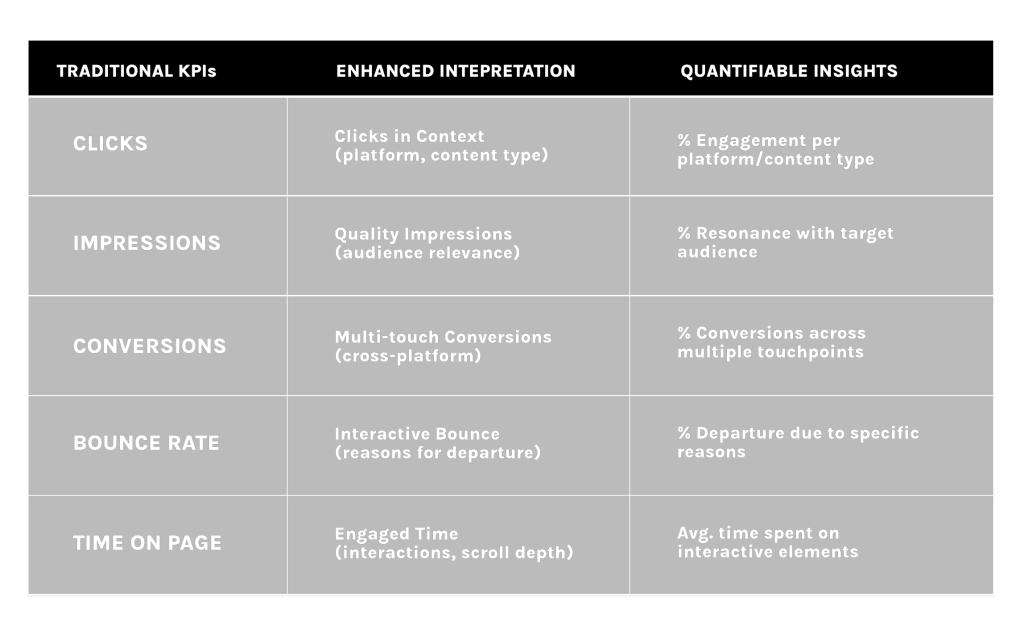
Traditional KPIs, foundational as they are, need recalibration in the face of the evolving modern consumer behaviors. As touchpoints proliferate and journeys grow more complex, standard metrics like clicks and impressions don't capture the entire narrative. Today's consumers, spread across diverse platforms and yearning for personalized and trustworthy experiences, necessitate a fresh lens on performance metrics.
The following table contrasts the classic indicators with their contemporary counterparts, offering a more precise roadmap for today's market.
As consumers navigate a multifaceted digital tapestry, their expectations and interactions with brands change dynamically. Traditional campaign methods risk becoming obsolete, unable to engage or convert these evolving audiences. In response, marketers must adopt agile and responsive strategies to ensure brands stay relevant and impactful in their outreach. Key among these approaches are:

Another pivotal strategy is hyper-personalization - a method that transcends traditional, generalized targeting. In response to consumers craving tailored experiences that reflect their preferences and needs, brands must turn to innovative tools like AI-driven analytics, real-time data processing, and advanced CRM systems, which empower them to gather intricate consumer data. With this, campaigns can be hyper-targeted, magnifying relevance, engagement, and, ultimately, conversion rates.
Modern times have brought forth a proliferation of engagement channels - from social media platforms like Instagram and Twitter to e-commerce sites, mobile apps, and even voice assistants - each holding a piece of the decision-making puzzle. Experts increasingly recognize the power of omnichannel strategies, emphasizing not just consistency but also the interplay of experiences across these channels. For brands to truly stand out, they must synchronize their messaging and ensure that campaign objectives harmoniously weave together across platforms. Why? Well, for starters, consistency. On top of that, it's about creating a symphonic brand experience. Integrated marketing platforms and structured data frameworks play pivotal roles in achieving this, sculpting a unified narrative that seamlessly guides the consumer, no matter where they choose to engage.

In performance marketing, return on investment (ROI) stands as the unequivocal benchmark of success. It's the tangible indicator of how effectively a campaign resonates, converts, and drives profit in relation to its cost.
Entering 2024, the marketing terrain is more fragmented and interconnected than ever before. The proliferation of new technologies, such as Extended Reality and 5G, has created fresh consumer touchpoints, demanding diverse strategies. Furthermore, the modern consumer, equipped with global consciousness and a desire for hyper-personalization, raises the bar for engagement. This, combined with escalating data privacy concerns and the integration of blockchain in digital transactions, means that marketers must reconcile innovation with trustworthiness, ensuring transparent and resonant campaigns in an increasingly complex digital sphere.
Confronting these performance marketing challenges requires a blend of insight and flexibility. Marketers must ground their decisions in data while staying prepared for the ever-evolving digital landscape.
Harnessing precise and relevant data allows marketers to pinpoint where their strategies resonate and where adjustments are needed, ultimately serving as the backbone for assured returns. Here are three key tactics:

A culture of adaptability and resilience allows marketing teams to respond effectively. By cultivating these traits, organizations can consistently align their strategies with shifting trends, anticipate potential disruptions, and maintain a competitive edge in dynamic markets. This involves:
Embracing the transformative landscape of 2024's performance marketing requires adaptability and a forward-thinking mindset. As the consumer journey evolves, so too must the strategies employed to engage, connect, and convert. And for those in search of guidance or deeper insights, remember: the path to enlightenment begins with a single conversation. Reach out to us at ??ccinquiries@creativeclicks.com and discover a world where your brand's potential knows no bounds.